The Crew, the Process, the Emerson Response
When the call from Emerson comes in, the goal is fastest-possible source-control plus right-sized equipment dispatch. The dispatcher captures the loss type (water vs fire vs sewage vs storm), the severity (a sink overflow vs a basement filling), and the access (gate codes, building manager, COIs). The crew is moving inside 10 minutes of the call ending — not 30, not 60.
Active emergency response — water actively intruding, fire just extinguished, sewage actively backing up — runs to a sub-hour on-site target across our service area. Emerson sits roughly 1 miles from our Washington Township base, so on a normal-traffic day that translates to 10 to 20 minutes door-to-door. Storm season we pre-stage equipment for surge events so individual response times do not slip even when call volume spikes across the corridor.
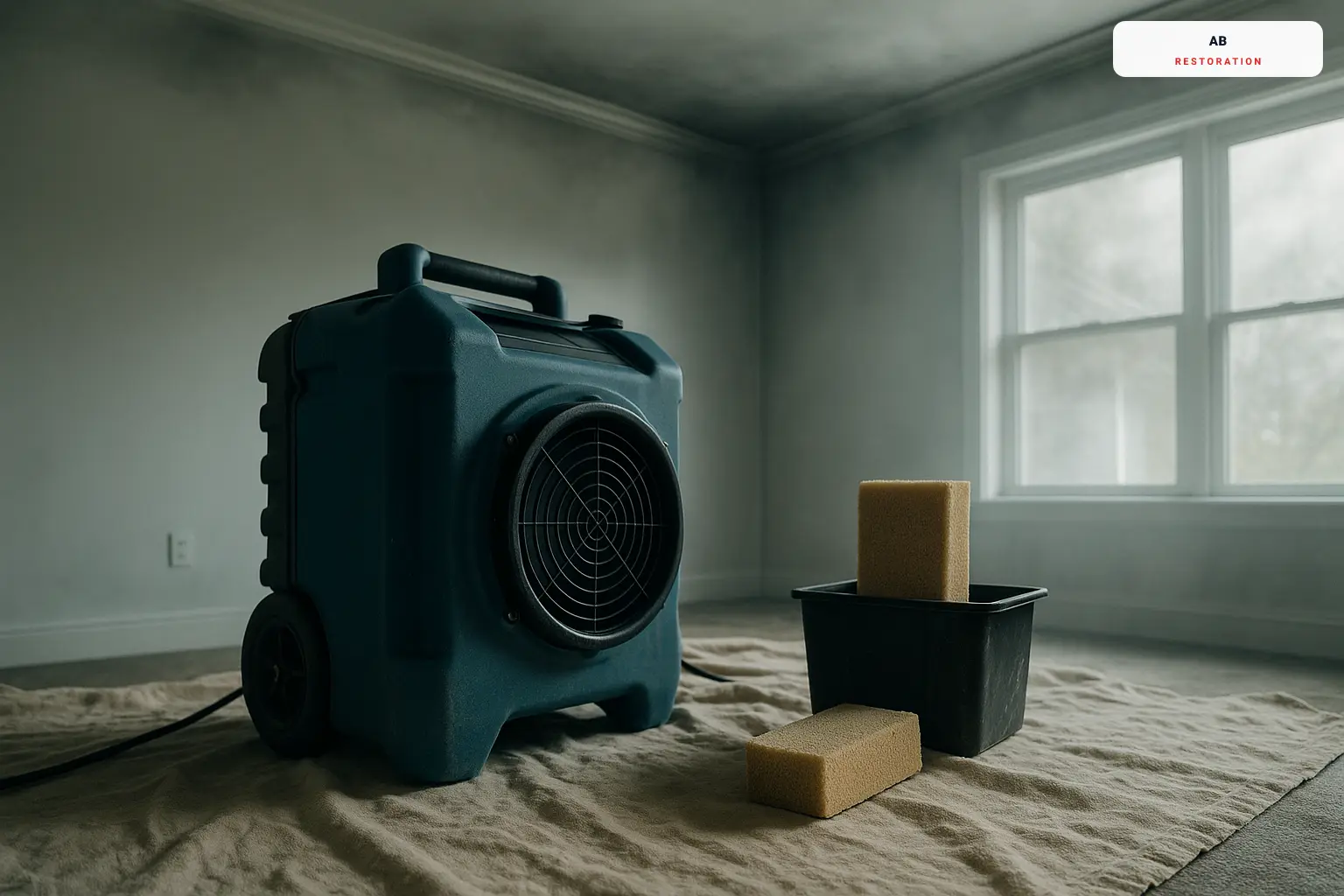
The on-site sequence: shut off the source, document the damage with photos and moisture readings, deploy extraction and drying equipment sized to the loss, monitor daily until each substrate returns to dry-standard. Reconstruction picks up on the back end with the same crew, scoped from the same Xactimate that mitigation produced. No handoff between mitigation and rebuild contractors, no separate negotiation, no scope-gap that the homeowner has to bridge.
What gets sent to the carrier on a Emerson job
Insurance handling on Emerson jobs follows the standard our carriers expect: building-diagram-mapped moisture readings, sequential photo documentation of every wet surface, Xactimate scopes with line-item pricing the adjuster can approve, and direct billing once authorization is on file. The cause-of-loss narrative we attach is the part that matters most — it determines which policy responds (homeowners, NFIP, sewer backup endorsement) and how much the carrier covers.